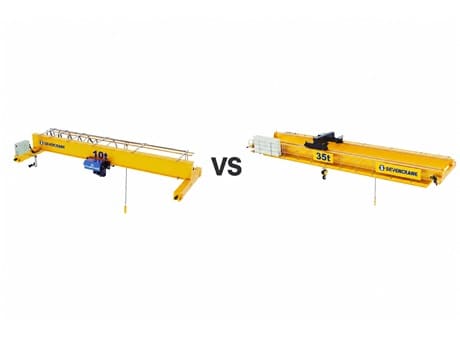
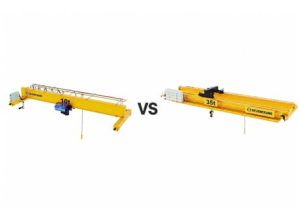
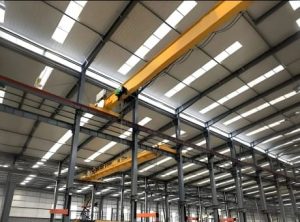
When many customers inquire about purchasing, they will directly ask: “How much does a single girder overhead crane cost?”
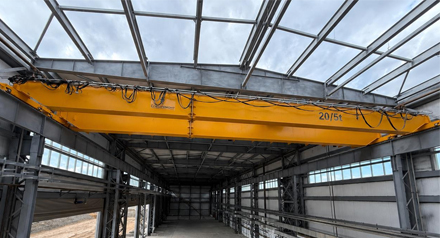
In fact, there is no unified fixed price for a puente grúa monorraíl. There is no standardized pricing on the market. Each piece of equipment is basically configured according to the customer’s needs. Every crane produced and exported by SEVENCRANE is customized based on the customer’s requirements. Before making a formal quotation, our professional sales team will confirm the basic parameter information with the customer. Or, based on the customer’s factory, they will help guide the customer to measure.
The final equipment price will be affected by dozens of parameters such as lifting capacity, span, lifting height, running distance, hoist type, control system, working level, etc. Only looking at the tonnage for the inquiry cannot obtain an accurate price.
This article will thoroughly analyze all the core price influencing factors to help customers understand the real cost composition of the crane and learn to scientifically estimate the budget and accurately match the manufacturer’s quotation.
1.Rated lifting capacity: The most core basic pricing factor
Lifting capacity is the primary indicator determining the price of a puente grúa monorraíl. The larger the lifting capacity, the more comprehensive upgrades in the overall material usage, structural specifications, and core components will be.
For large-tonnage equipment, a heavier main beam, reinforced end beams, a more powerful walking mechanism, and a heavy-duty lifting hoist are required. The overall steel usage, processing technology, and safety configuration will all increase.
Take an intuitive example: A 5-ton single girder overhead crane and a 20-ton single girder overhead crane, even with the same span and height, the overall cost difference is very obvious. The larger the tonnage, the higher the unit price increase.
2.Equipment span: Directly determines the cost of the main beam
The span refers to the net distance between the two running tracks of the crane, and is the second important cost variable after tonnage.
The larger the span, the longer and more stable the steel structure design of the main beam is required. To ensure the smooth operation, no deformation, and no sagging of the equipment, the main beam with a large span will have thicker materials, optimized cross-sectional structure, and a significant increase in steel consumption.
Small-span equipment uses less material and has a lower cost; large-span equipment has more complex structural processes and naturally has a higher cost. Every increase in the length of the span will lead to a steady increase in the cost.
3.Lifting height: Affects the configuration of hoists and steel wire ropes
Many customers tend to overlook the impact of lifting height on the price. In fact, the vertical lifting height directly determines the specifications of the lifting accessories.
The higher the lifting height, the longer the steel wire rope, the larger the capacity of the drum, and the corresponding upgrade of the body configuration of the electric hoist and the parameters of the lifting motor is required.
Standard height equipment can use the standard hoist, while ultra-high lifting conditions require customized extended accessories, and the overall configuration upgrade will also increase the cost.
4.Track running length: Affects the entire walking supporting system
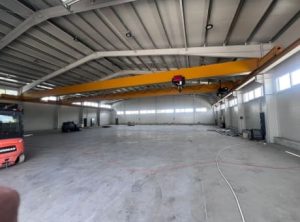
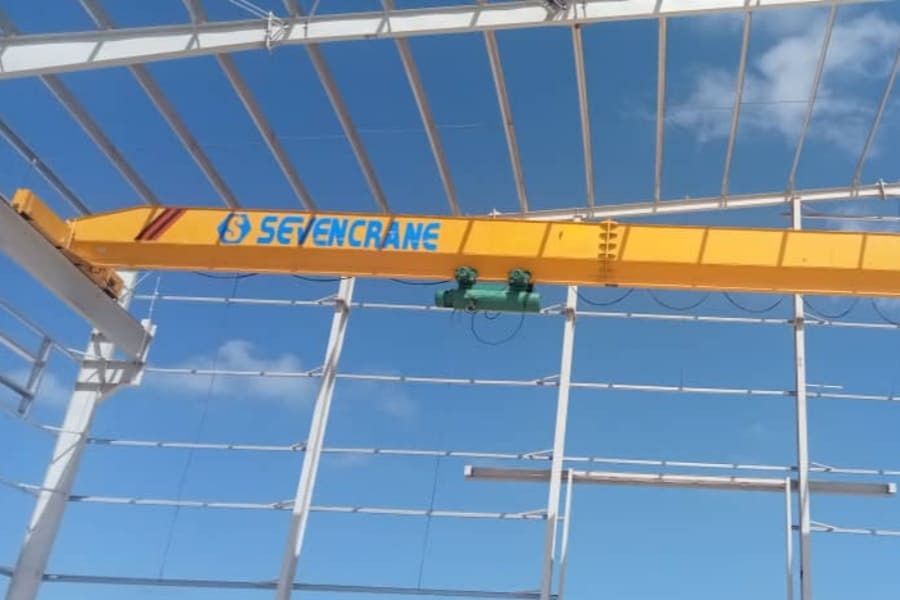
The workshop track running distance of a Puente grúa de una sola viga also affects the overall project cost.
The longer the running distance, the more lifting tracks, track connection parts, buffer devices, power cables, and sliding conductive systems need to be laid.
Short-distance running only requires a small amount of supporting consumables; long-distance full-line laying requires complete electrical and track support, and the overall supporting cost will increase significantly.
5.Hoist type and control system: Determine the usage experience
The type of hoist and control system are key optional features that drive price differences between units. Different configurations have obvious price differences.
Common hoists include CD/MD electric wire rope hoists, electric chain hoists, etc. Electric wire rope hoists have strong stability and are suitable for heavy loads; electric chain hoists are lightweight and flexible, suitable for light-duty conditions, and the costs vary depending on the model.
The control methods also vary: conventional handwheel wired control has the highest cost performance; wireless remote control operation is more convenient and safer; the driver’s cab control is mostly used for large and high-frequency equipment. The different configurations chosen by customers will lead to different final quotations.
6.Working level and usage frequency: matching equipment working standards
The frequency of equipment usage determines the working level and manufacturing standards of the crane, which also indirectly affects the cost.
For light-duty equipment used for occasional operations, a conventional standard configuration can be adopted to meet daily low-frequency usage.
For workshop assembly line high-frequency operations and 24-hour continuous working conditions, the working level needs to be upgraded. Core components require high-durability and high-strength configurations, making the equipment more durable and the cost higher than ordinary standard models.
7.Easily overlooked additional overall costs
Many customers only focus on the price of Puente grúa de una sola viga, ignoring the overall project cost of the equipment, which can lead to budget deviations. The true total project cost includes multiple hidden expenditures.
– Transportation costs: corresponding logistics costs are generated based on equipment size, weight, transportation distance, and maritime or land transportation methods.
– Installation and commissioning costs: on-site assembly, complete machine commissioning, power-on testing, and other labor and technical costs.
– Track and civil construction: track construction, ground foundation, steel structure reinforcement, and other infrastructure costs.
– Power supply supporting projects: circuit layout, power control system adaptation, power supply renovation, and other supporting expenditures.
– Acceptance and after-sales costs: equipment acceptance, trial operation, later maintenance, spare parts replenishment, etc., long-term costs.
Please note to all purchasers: a low-cost equipment body does not mean a lower total project cost. Low-end equipment has a higher failure rate and higher maintenance costs, and it is actually more costly in the long run.
The price of single girder bridge crane is not determined solely by tonnage, but by the lifting capacity, span, lifting height, running length, working level, and core configuration.
At the same time, additional costs such as transportation, installation, track construction, and power supply supporting projects are also important components of the project budget. Simply asking “How much is a 5-ton crane?” cannot obtain an accurate and usable real quotation.
To obtain an accurate budget and avoid later additions, the best way is to provide complete working condition parameters. SEVENCRANE can customize a puente grúa monorraíl solution based on the actual operating environment, lifting requirements, and usage frequency of the customer, and provide an accurate quotation, making the procurement budget clear and transparent.

 Español
  English
  Русский
  Português do Brasil
  Français