Lead time: 35 working days
Shipping method: Road transport
Condiciones de pago: T/T 50% + 50%
Export destination: Kazakhstan
Delivery terms: FCA
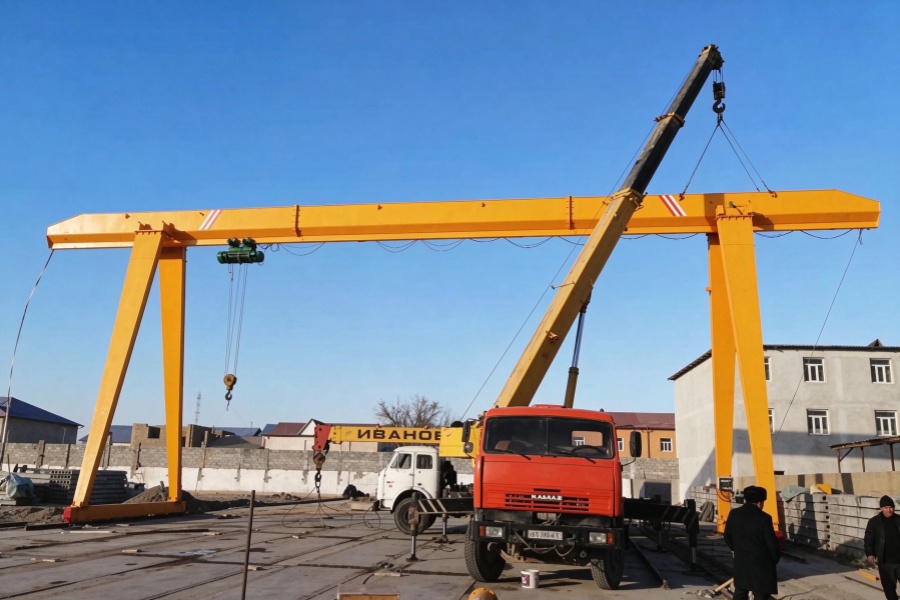
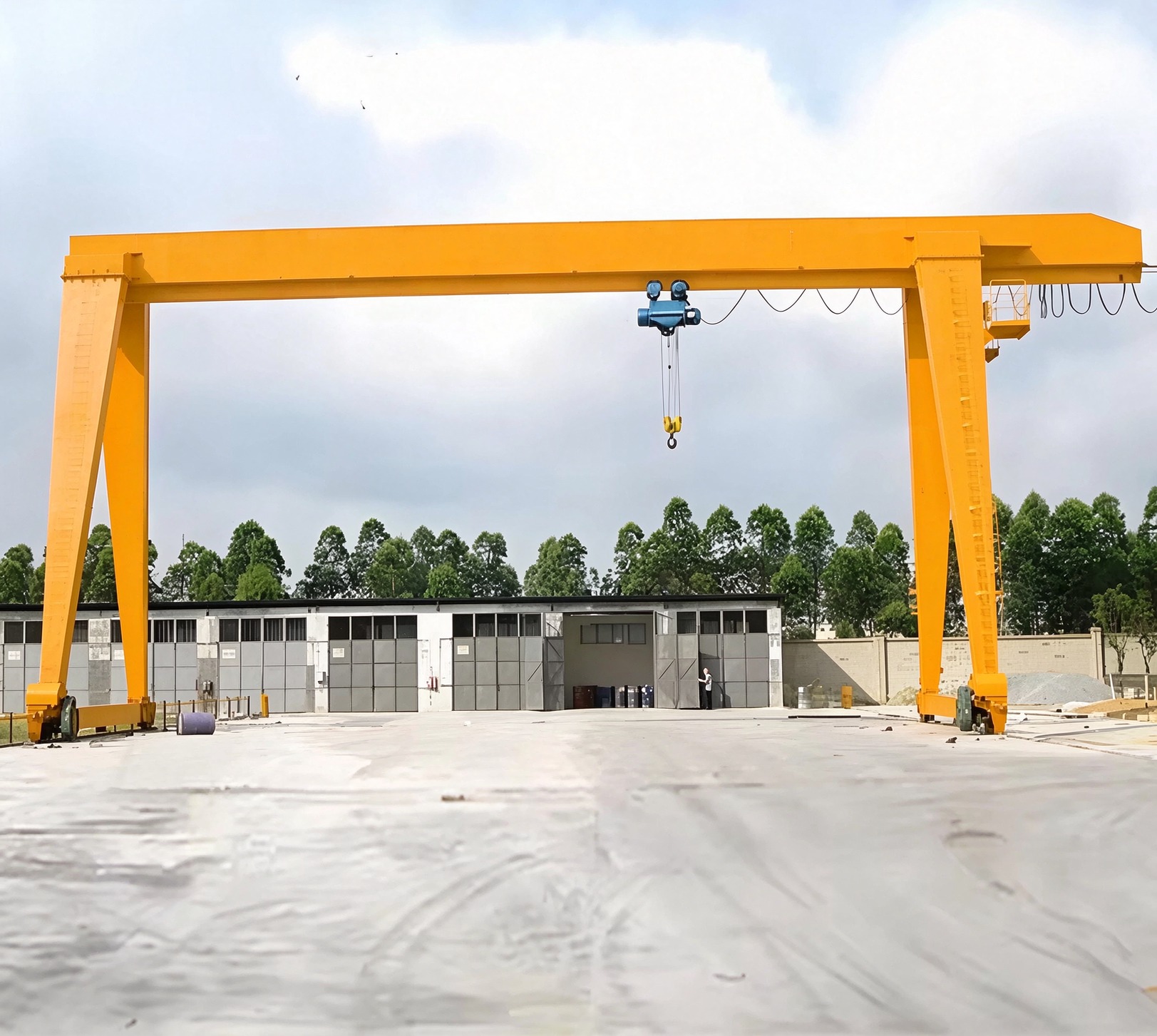
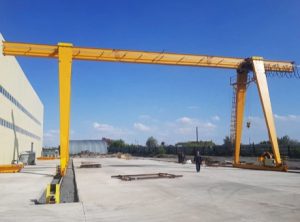
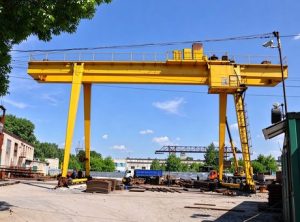
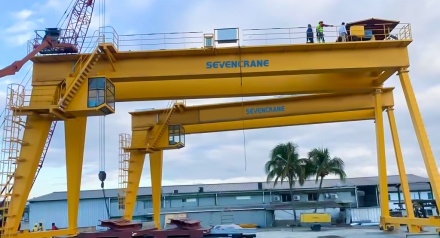
Product name: MH Single Girder Gantry Crane
Lifting capacity: 5t
Luz: 24m
Altura de elevación: 8m
Working class: A4
Método de funcionamiento: Control mediante colgante + control remoto
Tensión: 380 V, 50 Hz, trifásica
Ambient temperature: -30°C to +40°C
Cantidad: 1 unidad
The customer is from Kazakhstan and is the general manager of a local steel production and processing company. He has been engaged in the steel processing industry for over a decade and is highly experienced. He is also well-versed in cranes.
In February this year, the customer contacted SEVENCRANE via Facebook to inquire about a 5-ton single girder gantry crane.
The equipment is planned to be installed outdoors and is used for steel lifting and transportation.
The customer is located in the northern part of Kazakhstan, where the winter temperature is relatively low. Therefore, not only does the equipment need to meet the regular lifting requirements, but it must also adapt to the local low-temperature environment. Steel is prone to freezing and surface icing in winter, and the selection of lifting tools and rigging also needs to take this into account.
The customer requires that the single girder gantry crane can operate in an environment ranging from -30℃ to +40℃.
The customer specified that the main structural material should be Q355E steel to meet the requirements for steel performance in the low-temperature environment. E-grade steel has better low-temperature impact toughness, and the main beam and legs are less likely to undergo brittle cracking in severe cold conditions.
The electrical part requires the use of low-temperature-resistant cables. Ordinary cables tend to harden and crack at low temperatures, and long-term outdoor operation will bring potential risks. Low-temperature-resistant cables can maintain flexibility and reduce the risk of equipment failure and downtime.
The equipment is designed based on outdoor usage conditions, including rain protection, anti-corrosion, and details related to outdoor operation. The protection of the control cabinet and the low-temperature adaptability of the lubricating grease also need to be considered.
The customer requires the equipment to have a working level of A4. As the daily usage time is approximately 5 hours, the working level reflects the frequency of equipment use, and A4 is suitable for medium-busy operation intensity, matching the customer’s actual usage rhythm.
Outdoor lifting operations in the steel industry need to consider equipment usage frequency, load changes, and working environment. The equipment solution needs to be determined based on the actual usage frequency and lifting tasks, rather than simply applying standard models based on the lifting capacity.
The customer attaches great importance to the delivery time and hopes that the 5-ton gantry crane can be put into use as soon as possible.
SEVENCRANE has provided a delivery period of 35 working days based on production arrangements. Both parties agreed to use the FCA factory delivery method, with the customer arranging subsequent transportation.
The customer proposed that a delay compensation clause must be included in the contract: for each day of delay, compensation will be made at one-thousandth of the contract amount. To promote cooperation, SEVENCRANE accepted this requirement and included it in the contract.
Accepting such a clause means that the production plan must leave sufficient margin. From raw material procurement to assembly and testing, each step must be advanced according to the nodes, otherwise, if there is a delay, the liability for compensation will be borne by the supplier.
Starting from the first inquiry in February, the entire project follow-up lasted for approximately six months. The customer did not lack the intention to purchase, but was affected by actual site conditions and project coordination issues, unable to proceed immediately.
① Site Use Permit Issues
The customer initially planned to install the grúa pórtico on a leased site. However, the site owner initially refused to install it, fearing foundation construction and ground damage. As a result, the project was temporarily unable to proceed.
Subsequently, the two parties had multiple communications regarding the site use issue, and the site owner eventually agreed to install it. During this period, the installation method and foundation conditions were also repeatedly adjusted according to the site conditions.
② Multiple Adjustments of Parameters and Quotations
Due to the continuous changes in site conditions, installation requirements, and project progress, the equipment parameters also underwent multiple adjustments. SEVENCRANE updated the technical solution, quotations, and contract based on the latest customer requirements.
Both parties continued to communicate and gradually resolved the actual problems that affected the project’s closing. By the end of July, the client finally solved all the key issues and immediately accelerated the procurement process, ultimately completing the order.
After the client resolved the issues related to the site and the project’s progress at the end of July, they quickly pushed forward the procurement process.
Both parties finally confirmed the equipment parameters, technical solutions, quotations, and contract terms. The project entered the execution stage.
SEVENCRANE organized production according to the final confirmed plan and arranged delivery as agreed. Currently, the client has received a 5t single girder gantry crane and sent an installation feedback. We look forward to the machine’s performance when it is put into use!
From the initial inquiry to the final delivery, SEVENCRANE always flexibly adjusted the plan according to the client’s needs and actively cooperated to solve site, installation, and technical problems. With professional product configuration, timely communication, and continuous project follow-up, it ultimately helped the client complete the procurement and receive the equipment.




 Español
 English
 Русский
 Português do Brasil
 Français