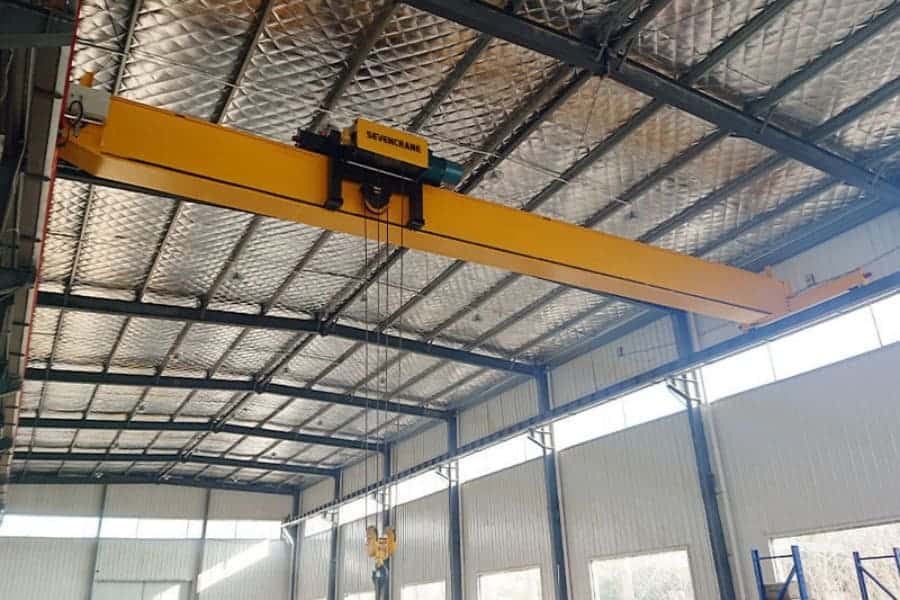
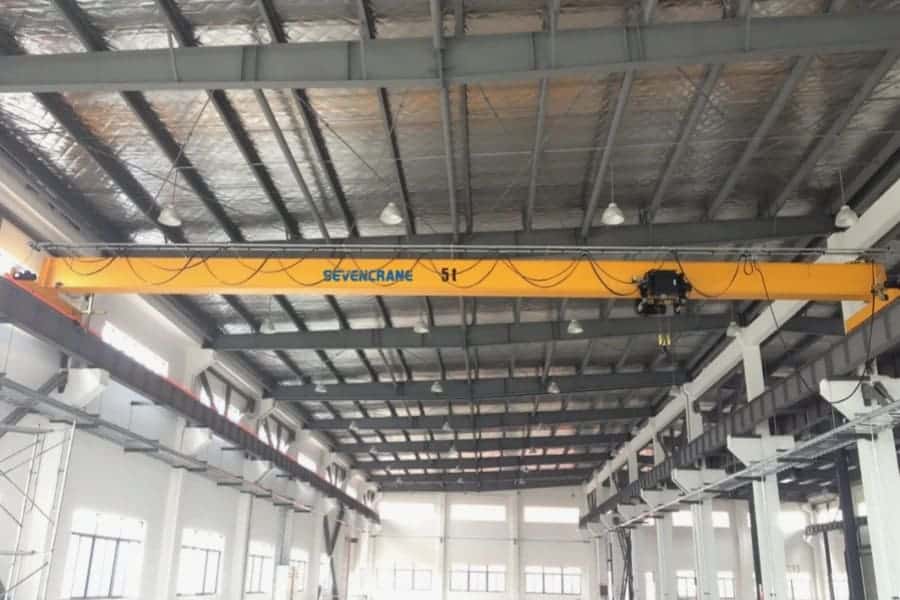
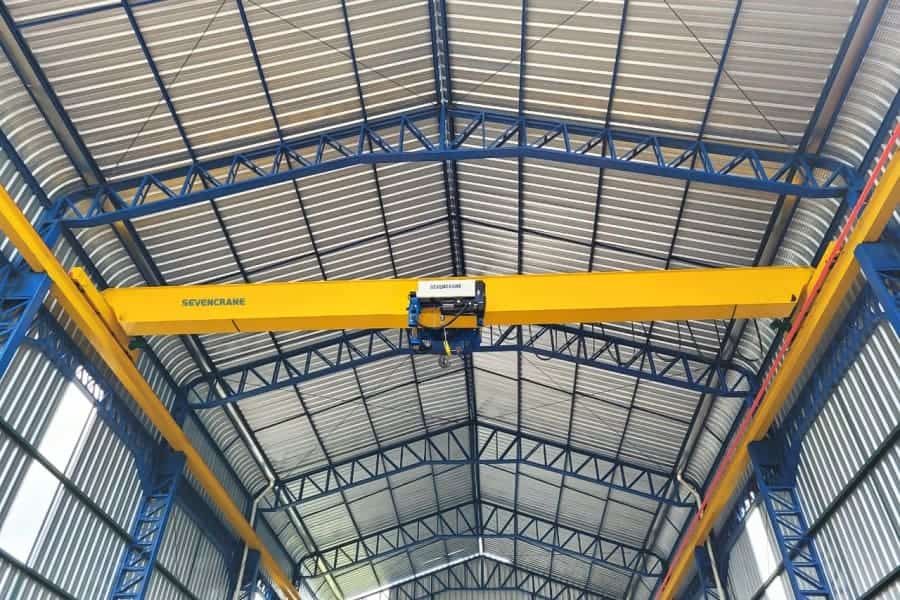
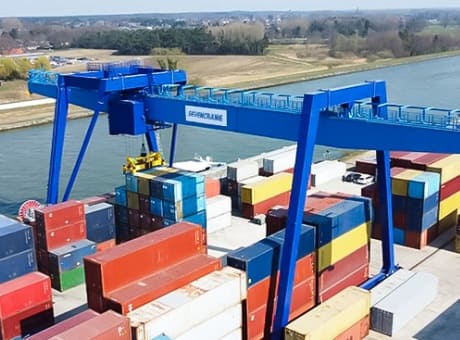
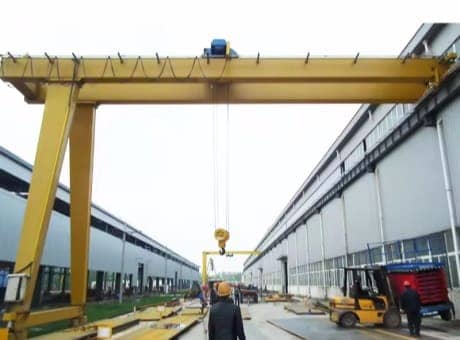
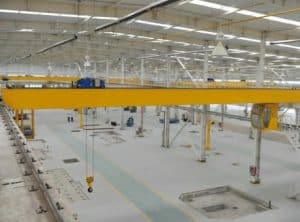
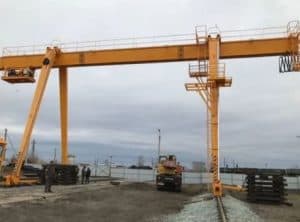
The design of an overhead crane is not only about matching structure and size, but also a comprehensive task that integrates engineering technology, safety regulations and application scenarios. In order to ensure that the bridge crane can perform at its best in various industrial environments, engineers must consider key factors in multiple dimensions during the design phase. These factors are interrelated and jointly affect the efficiency, reliability and service life of the crane.
Operating temperature
The operating temperature is the primary environmental factor that determines the operating stability of the bridge crane. Different workplaces may face extremely high or low temperatures, which puts additional requirements on the equipment:
-High temperature environment: Such as steel smelting, glass manufacturing and other industries, the temperature can reach 60℃ or higher. In such environments, it is necessary to configure the control cabinet with an air conditioning cooling system or a cooling fan, and select high-temperature resistant cables and insulation materials to prevent overheating from causing component aging or failure.
-Low temperature environment: Such as winter construction in the north or cold areas of the plateau, the motor, brake system and hydraulic oil are required to work normally at low temperatures. Low-temperature lubricants, antifreeze seals and preheating systems can be selected to avoid starting difficulties.
In addition, in areas with frequent temperature changes, the influence of thermal expansion and contraction on the stability of steel structures should also be considered, and strength compensation design should be carried out.
Working environment
The operating environment of overhead crane determines the difference in its protection level, surface treatment and structural configuration:
-Heavy pollution areas (such as cement plants, mines, metallurgical workshops): Dust or particulate matter concentration is high, and high sealing level (IP54 and above) motors, control boxes and other electrical components are required, and dust covers are set to reduce the failure rate.
-High humidity or corrosive environment (such as chemical workshops, coastal areas, outdoor docks): The steel structure needs to be treated with three layers of anti-corrosion treatment, including hot spray zinc, epoxy zinc-rich primer and polyurethane topcoat, and stainless steel fasteners are selected to avoid rust and corrosion.
-Places with explosive or flammable gases: Such as oil depots, paint workshops, etc., explosion-proof motors and electrical components are required, and they are designed in accordance with the corresponding ATEX or IECEx standards.
In order to ensure the continuous and stable operation of bridge cranes, protection level planning and material selection should be carried out in advance for different environments.
Installation altitude
The altitude of the installation site will also affect the operating performance of the bridge crane. Especially in plateau areas (for example, more than 1,000 meters above sea level):
As the altitude increases, the air becomes thinner and the heat dissipation capacity of the motor decreases. At this time, the motor power reserve should be increased or the cooling system should be added to prevent the motor from overheating. At the same time, the electrical system also needs to consider factors such as insulation strength, air gap and breakdown voltage to prevent breakdown failure. Engineers usually correct the motor power coefficient according to the formula and make personalized selections.
Multiple cranes work together
In large factories or warehouses, there are often multiple bridge cranes running on the same track. At this time, system cascading and anti-collision design are required:
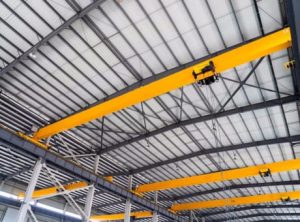
-Multiple cranes running on the same track: infrared/laser anti-collision devices need to be configured, or PLC logic control system is used to automatically identify the operating range.
-Cross-operation at different heights: limit control and path planning software are required to avoid path conflicts.
-Load transfer collaboration: If goods are hoisted from one area to another, it involves a master/slave linkage system, and variable frequency synchronous control is used to ensure smooth docking of the two cranes.
This can avoid equipment damage or safety accidents caused by improper operation or overlapping paths.
Work area restrictions
Modern industrial bridge cranes can be equipped with area restrictions, which can define “prohibited areas” or “slow-down areas” through software to prevent the hook from entering high-risk areas, such as operator areas, wall edges or around fragile equipment. In addition, the operating range can be limited by laser ranging, limit switches, etc. to improve overall work efficiency and safety factors.
Types of loads handled
Different load types have different technical requirements for cranes:
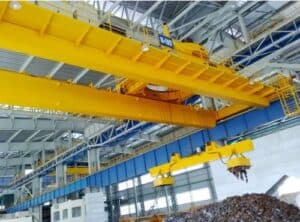
-Irregular materials (such as steel coils, pipes, molds, etc.): Customized lifting equipment is required, such as electromagnetic suction cups, clamps, C-hooks, etc.
-Liquid containers or items that are easy to shake: A buffer system or anti-shake device needs to be designed.
-Extra-long or special-shaped structural parts: A double trolley structure or a bridge + cantilever linkage system can be used to enhance stability.
The lifting system needs to reasonably match the lifting plan according to factors such as the weight, shape, and center of gravity distribution of the load.
Operation frequency and working level
The frequency of use of bridge cranes directly affects their lifespan and maintenance requirements:
-High frequency occasions: such as steel manufacturing, power maintenance and other industries, it is recommended to adopt medium/heavy working level (such as FEM 3m/4m or ISO M5/M6) configuration, use high-strength components and high-power drive system.
-Continuous operation requirements: optional dual drive system, main and standby power supply, automatic lubrication device to ensure long-term uninterrupted operation.
-Intelligent requirements: with the automated production line, the crane can be operated semi-automatically/fully automatically, and remote control and real-time monitoring through HMI can be used to improve overall production capacity.
The design of bridge cranes is a systematic project, which requires an in-depth understanding of the customer’s industry background, project site and operating conditions. SEVENCRANE always adheres to the principle of “safety first, efficiency first” to provide customers with full-process services from preliminary consultation, solution customization to delivery and operation. We not only focus on the equipment itself, but also pay more attention to the comprehensive performance of the crane in the actual use scenario of the customer.
If you are looking for overhead crane solution suitable for your working conditions, please feel free to contact SEVENCRANE. We look forward to being your trusted partner to achieve efficient and safe material handling goals together.
This website uses cookies so that we can provide you with the best user experience possible. Cookie information is stored in your browser and performs functions such as recognising you when you return to our website and helping our team to understand which sections of the website you find most interesting and useful.
Strictly Necessary Cookies
Strictly Necessary Cookie should be enabled at all times so that we can save your preferences for cookie settings.
If you disable this cookie, we will not be able to save your preferences. This means that every time you visit this website you will need to enable or disable cookies again.