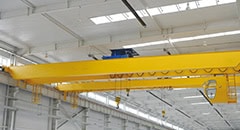
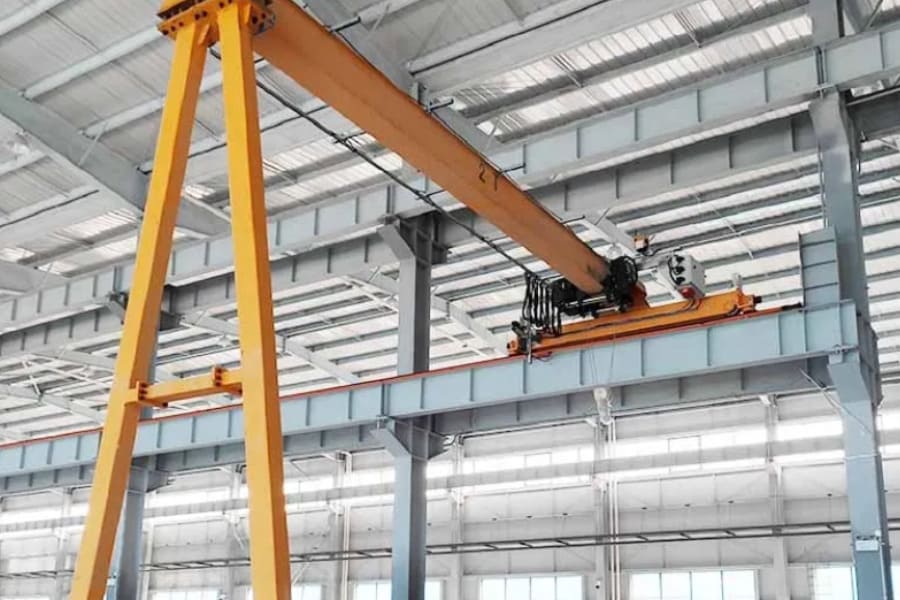
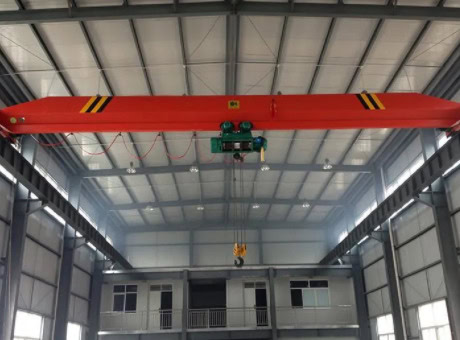
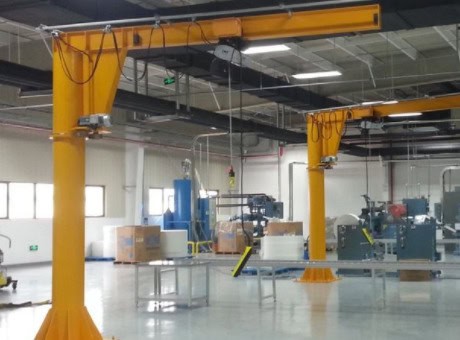
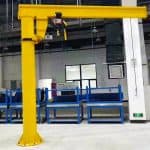
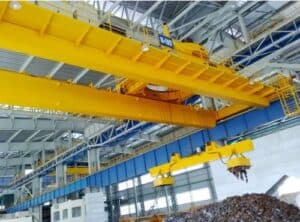
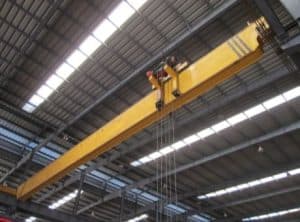
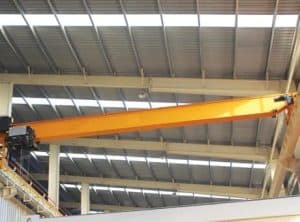
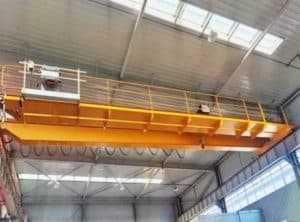
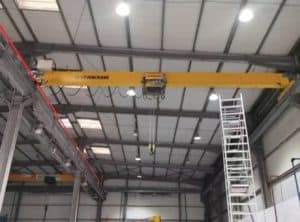
The semi gantry crane design includes a bridge, crane running mechanism, trolley running mechanism and lifting mechanism. It is unique in that one side of it is supported by legs on wheels or tracks, while the other side relies on a runway system that is usually attached to a building column or side wall. This configuration has many advantages in both indoor and outdoor applications.
Efficient Use of Space
One of the main advantages of the single leg gantry crane is its space-saving design. Unlike traditional bridge cranes that require two runways supported by building columns, it only requires one runway, freeing up valuable floor space and making it ideal for facilities with limited space. This streamlined structure also allows the semi gantry crane to operate near an existing bridge crane without interrupting its function, thereby improving overall work efficiency.
Installation and Movement Flexibility
The semi gantry crane has impressive flexibility in installation and relocation. If the facility only needs the crane temporarily, it is easier to disassemble and move than a bridge crane, which is particularly beneficial for projects that require a mobile, adaptable lifting solution. Additionally, because the rail system is only attached to one side of the crane, it can be modified to fit different locations or structures more easily than other types of cranes.
Suitable for a Variety of Applications
Single leg gantry cranes are used in numerous industries, including manufacturing, warehouses, construction and logistics, to handle materials, heavy equipment and machinery. It can be adapted to outdoor applications, where weather-resistant coatings and protective measures help them withstand the elements.
With its adaptive design, flexibility and strong load capacity, the semi gantry crane serves as a cost-effective and versatile solution for a variety of industrial environments.
This website uses cookies so that we can provide you with the best user experience possible. Cookie information is stored in your browser and performs functions such as recognising you when you return to our website and helping our team to understand which sections of the website you find most interesting and useful.
Strictly Necessary Cookies
Strictly Necessary Cookie should be enabled at all times so that we can save your preferences for cookie settings.
If you disable this cookie, we will not be able to save your preferences. This means that every time you visit this website you will need to enable or disable cookies again.