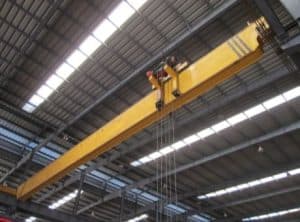
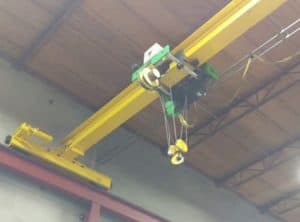
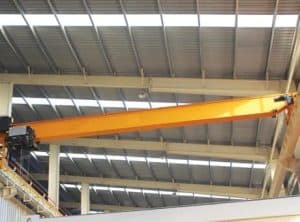
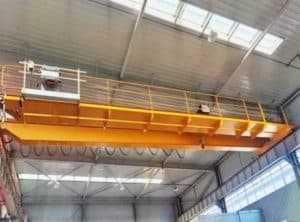
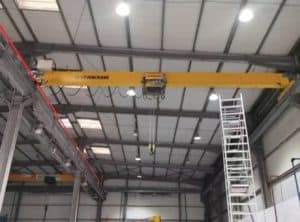
Single Girder EOT Crane: This type of crane consists of a single bridge girder supported by end trucks on either side. It is suitable for light to moderate lifting applications and is commonly used in workshops, warehouses, and small manufacturing units.
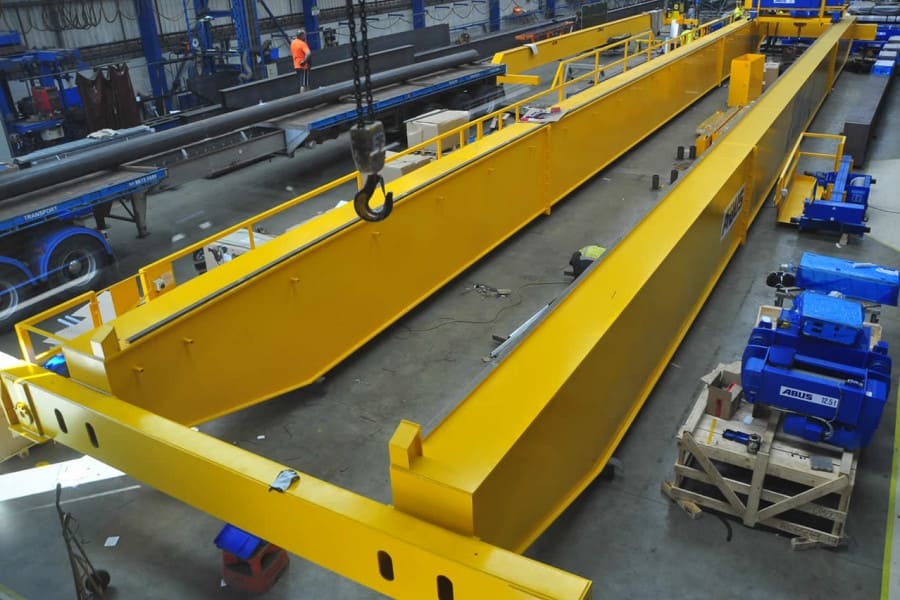
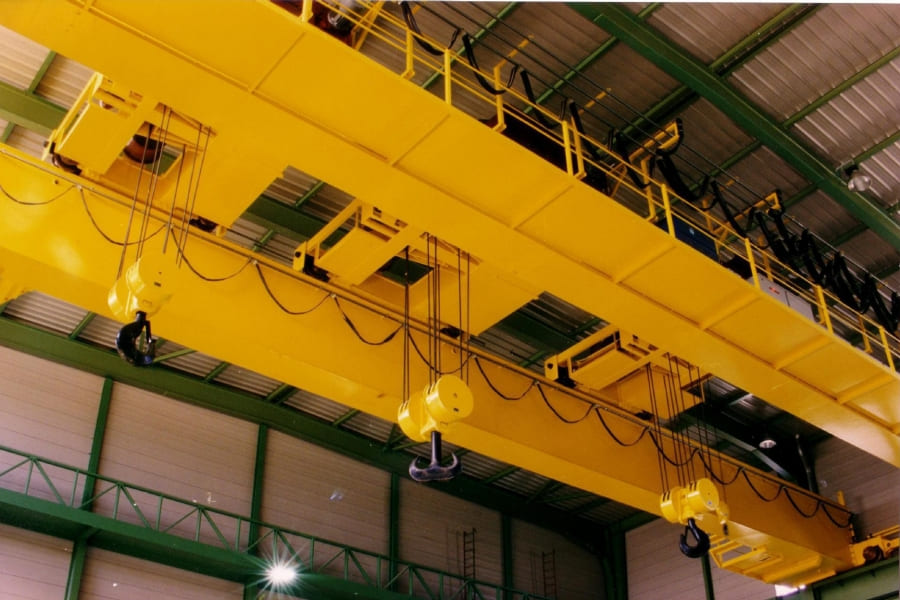
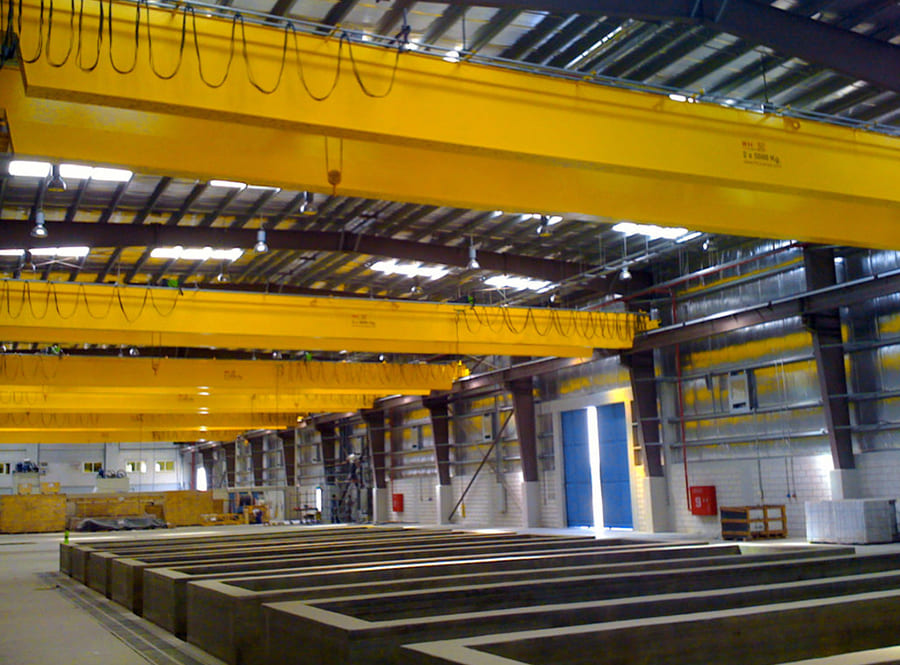
Double Girder EOT Crane: Double girder EOT cranes have two bridge girders that provide increased lifting capacity and stability. The hoist is mounted between the girders, allowing for efficient lifting and precise load control. These cranes are used in heavy-duty applications such as steel mills, power plants, and large-scale manufacturing facilities.
Under Running EOT Crane: In under running EOT cranes, the bridge girders are suspended from the building roof structure, and the end trucks run on the lower flange of the girders. This design maximizes the available headroom and is often used in buildings with limited space or where the crane needs to travel along multiple parallel runways.
Top Running EOT Crane: Top running EOT cranes are the most common type of EOT crane. The bridge girders are supported on rails or beams mounted on the top of the building structure. The end trucks run on the rails, allowing for efficient load movement and higher lifting capacities.
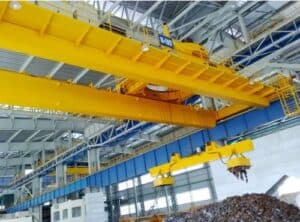
Magnetic EOT Crane: Magnetic EOT cranes are designed with an electromagnetic lifting mechanism. They are used to handle ferromagnetic materials such as steel plates, bars, and scrap. The magnetic attachment allows for efficient and controlled lifting and release of the material.
Grab Bucket EOT Crane: Grab bucket EOT cranes are equipped with a grab bucket attachment for handling bulk materials such as coal, sand, and grains. The grab bucket is operated by a hoisting mechanism and can open and close to pick up or release the material.
Explosion-Proof EOT Crane: Explosion-proof EOT cranes are designed for hazardous environments where there is a risk of explosive gases or dust. These cranes are built to strict safety standards and incorporate features such as spark-resistant components, sealed electrical enclosures, and explosion-proof motors.
These are some of the common types of electrically operated overhead traveling cranes. The selection of the appropriate type depends on factors such as lifting capacity, span, working environment, and specific material handling requirements.
This website uses cookies so that we can provide you with the best user experience possible. Cookie information is stored in your browser and performs functions such as recognising you when you return to our website and helping our team to understand which sections of the website you find most interesting and useful.
Strictly Necessary Cookies
Strictly Necessary Cookie should be enabled at all times so that we can save your preferences for cookie settings.
If you disable this cookie, we will not be able to save your preferences. This means that every time you visit this website you will need to enable or disable cookies again.