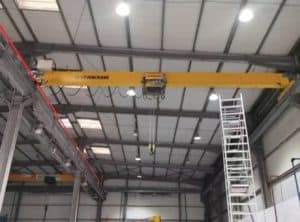
Automotive Repair: Overhead hoists can be used to lift engines, transmissions, or other heavy automotive components, making it easier to perform repairs and maintenance on vehicles.
Construction: Overhead hoists are useful in construction sites for lifting and moving heavy materials such as steel beams, concrete forms, or construction equipment.
Warehousing: Overhead hoists can be used in warehouses for lifting and moving heavy pallets, machinery, or other bulky items. They can help with efficient material handling and streamline warehouse operations.
Manufacturing: Overhead hoists are commonly used in manufacturing facilities for lifting heavy equipment, tools, or components during assembly processes. They can improve productivity and ensure safe handling of heavy objects.
Boat and Marine Industry: Overhead hoists are essential in boatyards and marinas for lifting boats and placing them in or out of the water. They can also be used for lifting and moving boat engines or other marine equipment.
Agriculture: Overhead hoists can aid in agricultural operations by lifting and moving heavy farming equipment, such as tractors, plows, or irrigation systems.
HVAC Installation and Maintenance: Overhead hoists can assist in the installation and maintenance of heating, ventilation, and air conditioning (HVAC) systems by lifting and positioning heavy HVAC units or ductwork.
Event Setup: Overhead hoists can be used in event venues for lifting and suspending audiovisual equipment, lighting fixtures, or stage props during setup and dismantling.
It’s important to note that the specific application of a Harbor Freight overhead hoist will depend on the hoist’s capacity, design, and the safety guidelines provided by the manufacturer. Always follow proper safety procedures and consult the manufacturer’s instructions when using any lifting equipment.
This website uses cookies so that we can provide you with the best user experience possible. Cookie information is stored in your browser and performs functions such as recognising you when you return to our website and helping our team to understand which sections of the website you find most interesting and useful.
Strictly Necessary Cookies
Strictly Necessary Cookie should be enabled at all times so that we can save your preferences for cookie settings.
If you disable this cookie, we will not be able to save your preferences. This means that every time you visit this website you will need to enable or disable cookies again.