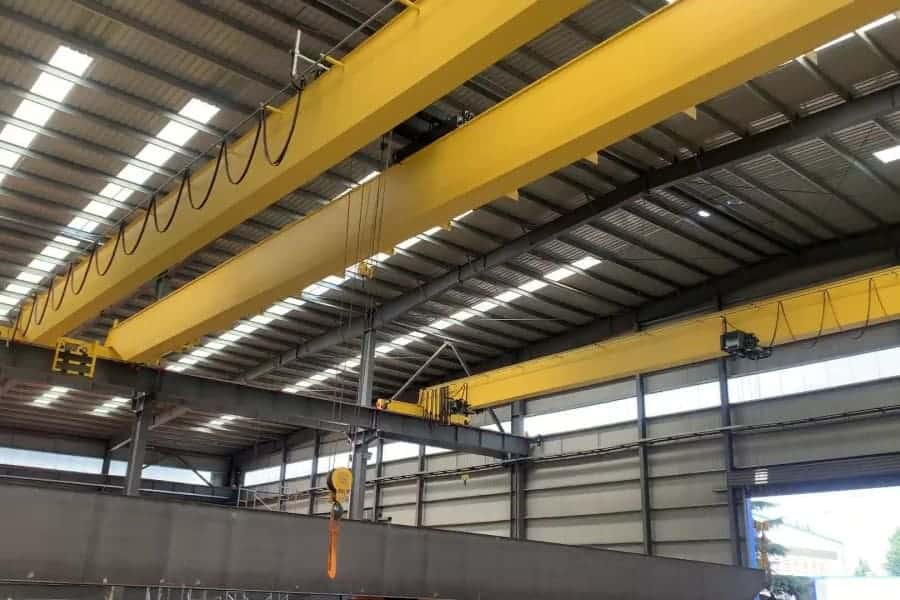
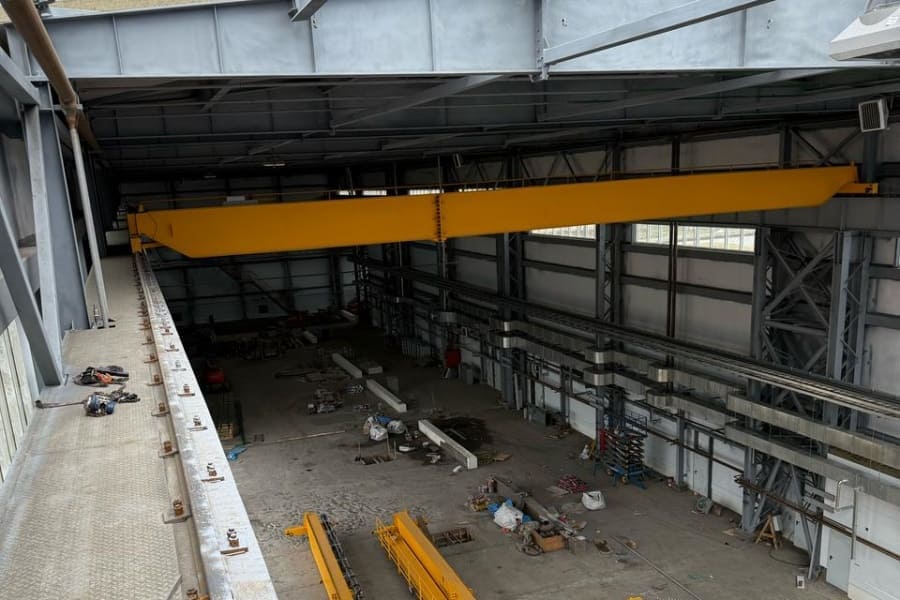
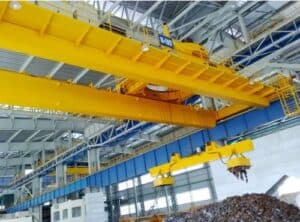
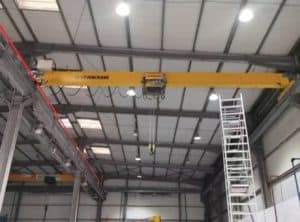
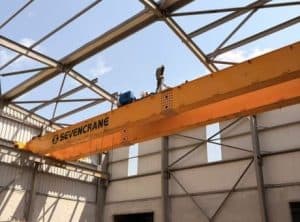
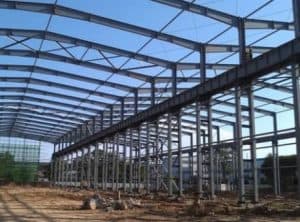
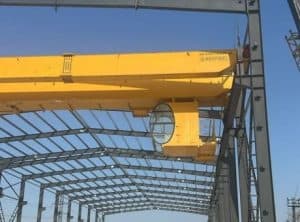
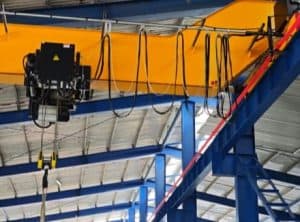
This customer from Côte d’Ivoire is the owner of a local metallurgical plant specializing in lead processing and refining. The purpose of this purchase was to install a double girder overhead crane to transport molten liquid lead from the melting area to the refining workshop. Due to the nature of the operation, the project involved strict requirements regarding temperature resistance, safety standards, and heavy-duty working classification.
The customer initially approached us with technical drawings and general specifications for quotation. At the beginning, the application details were not clearly described as metallurgical use. Based on the provided parameters—lifting capacity, span, and lifting height—we quoted a standard double girder overhead crane solution.
However, during further technical clarification, the customer emphasized two critical points:
*The crane would operate in a high-temperature environment.
*The working duty classification must reach A7 level, suitable for frequent, heavy-duty operations.
This changed the entire configuration approach. We immediately reassessed the project and proposed a true A7 metallurgical-grade double girder crane, equipped with heat-resistant components, reinforced structure design, and enhanced safety systems. The revised proposal included:
♦Heat-insulated motor protection
♦High-temperature-resistant cables
♦Double braking system for the hoisting mechanism
♦Heavy-duty gearbox and hardened gears
♦Reinforced drum and wire rope configuration
♦Optimized structural rigidity for continuous high-load cycles
At this stage, the customer mentioned that they already had a quotation from Demag Cranes, from whom they had previously purchased equipment with satisfactory performance. Their concern was whether our equipment could match the reliability and durability of established European brands.
Rather than competing solely on price, we focused on technical transparency. We carefully explained the structural and functional differences between a standard overhead crane and a metallurgical A7 crane. We provided load calculation reports, fatigue analysis explanations, component brand details, and real export cases of heavy-duty cranes delivered to high-temperature industries.
We also explained how metallurgical cranes are specifically designed for handling molten metal, where operational risk is significantly higher. In such environments, safety redundancy, braking reliability, and structural durability are critical factors—not just lifting capacity.
The customer compared our proposal carefully with Demag’s offer. While the German brand had strong recognition, our quotation provided a highly competitive price-performance ratio, along with full customization according to their plant layout. Additionally, we offered responsive technical support and flexible production scheduling.
After several rounds of discussion and technical verification, the customer gained confidence in our engineering capabilities and ultimately decided to place the order with us. The project marked a significant breakthrough in the West African metallurgical market and strengthened our position in heavy-duty crane applications.
Important Considerations When Using a Double Girder Overhead Crane
Operating a double girder overhead crane—especially in heavy-duty or metallurgical environments—requires strict adherence to safety and maintenance standards. Below are key considerations:
Proper Working Classification Selection: Always ensure the double girder overhead crane’s duty classification (A5, A6, A7, etc.) matches the actual operating frequency and load cycle. Underrated cranes may suffer premature structural fatigue or mechanical failure.
Temperature Protection: In high-temperature environments such as steel or lead processing plants, motors, cables, and electrical components must be heat-resistant. Insulation protection and regular inspection are essential to prevent overheating.
Braking System Reliability: Metallurgical heavy duty bridge cranes should use dual braking systems for hoisting mechanisms. Regular brake inspections and timely replacement of worn friction components are crucial for operational safety.
Structural Inspection: Periodic inspection of main girders, end beams, and weld joints is necessary to detect cracks, deformation, or fatigue. Heavy-duty bridge cranes experience significant cyclic stress over time.
Wire Rope and Hook Monitoring: Check wire ropes for wear, broken strands, or deformation. Hooks should be inspected for cracks and excessive opening. Any abnormality must be addressed immediately.
Electrical System Safety: Ensure stable power supply, proper grounding, and protection against dust and heat exposure. Control systems should be tested regularly.
Operator Training: Operators must be professionally trained and understand load limits, emergency procedures, and safe lifting practices—especially when handling molten metal.
Establish a scheduled preventive maintenance program, including lubrication, bolt tightening, alignment checks, and load testing. With proper configuration, professional installation, and disciplined maintenance, double girder overhead crane can deliver long-term safety, efficiency, and durability even in demanding high-temperature environments.
This website uses cookies so that we can provide you with the best user experience possible. Cookie information is stored in your browser and performs functions such as recognising you when you return to our website and helping our team to understand which sections of the website you find most interesting and useful.
Strictly Necessary Cookies
Strictly Necessary Cookie should be enabled at all times so that we can save your preferences for cookie settings.
If you disable this cookie, we will not be able to save your preferences. This means that every time you visit this website you will need to enable or disable cookies again.