Pillar Jib Crane with Electric Hoist for Materials Handling
Date: 2025-01-09
Share us:
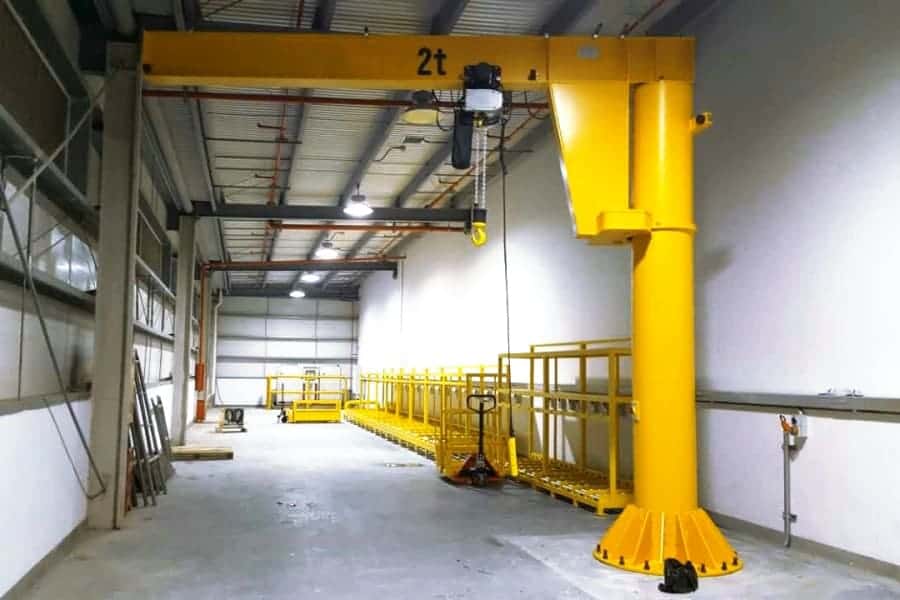
Jib crane mainly consists of a column, cantilever, rotating mechanism, lifting mechanism and electrical control system. The column is usually fixed on the ground or other supporting structures to provide stable support for the cantilever. The cantilever can rotate at a certain angle in the horizontal direction, expanding the working range. The rotating mechanism enables the cantilever to rotate flexibly to meet the lifting needs in different directions. The lifting mechanism is responsible for lifting and lowering heavy objects and usually uses electric hoists . The electrical control system controls each action of the cantilever crane to ensure safe and reliable operation.
First, the pillar jib crane occupies a small space. Due to its unique structural design, the cantilever crane can be installed in places with limited space, such as workshop corners and narrow passages, without causing excessive interference to the surrounding working environment.
Second, it is flexible and convenient to operate. The cantilever can be rotated and extended as needed, making it more convenient to lift heavy objects. Operators can easily move heavy objects to the designated position within a large range, improving work efficiency.
Moreover, the pillar jib crane has a relatively high lifting capacity. Although it is a light and small lifting equipment, through reasonable design and configuration, it can meet the lifting needs of materials of different weights.
In addition, the installation and maintenance of the jib crane are relatively simple. Its structure is relatively simple, and the installation process does not require complex large equipment and cumbersome processes. In daily use, only regular inspections and maintenance are needed to ensure its stable performance and safety and reliability.
This website uses cookies so that we can provide you with the best user experience possible. Cookie information is stored in your browser and performs functions such as recognising you when you return to our website and helping our team to understand which sections of the website you find most interesting and useful.
Strictly Necessary Cookies
Strictly Necessary Cookie should be enabled at all times so that we can save your preferences for cookie settings.
If you disable this cookie, we will not be able to save your preferences. This means that every time you visit this website you will need to enable or disable cookies again.