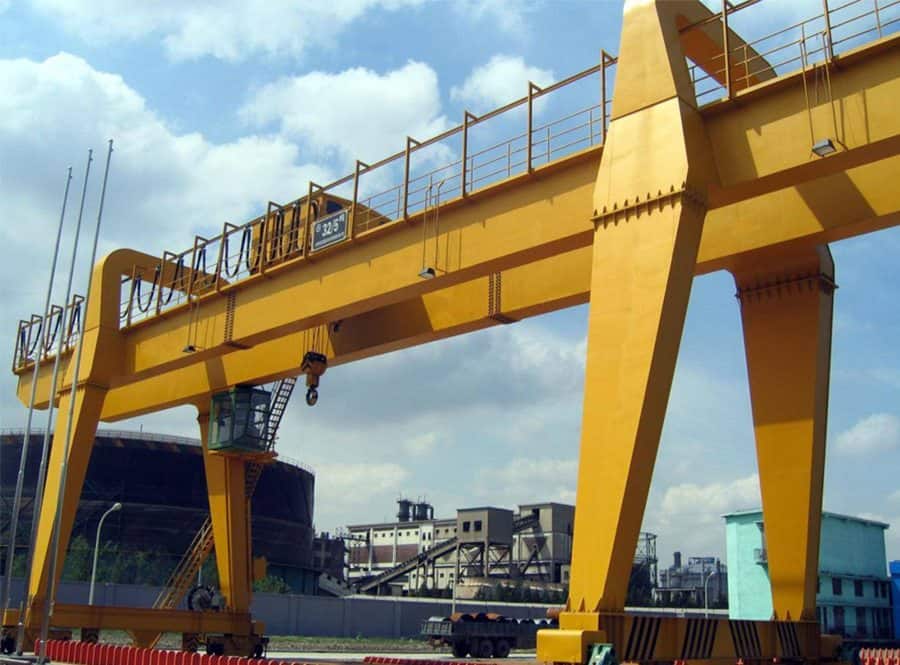
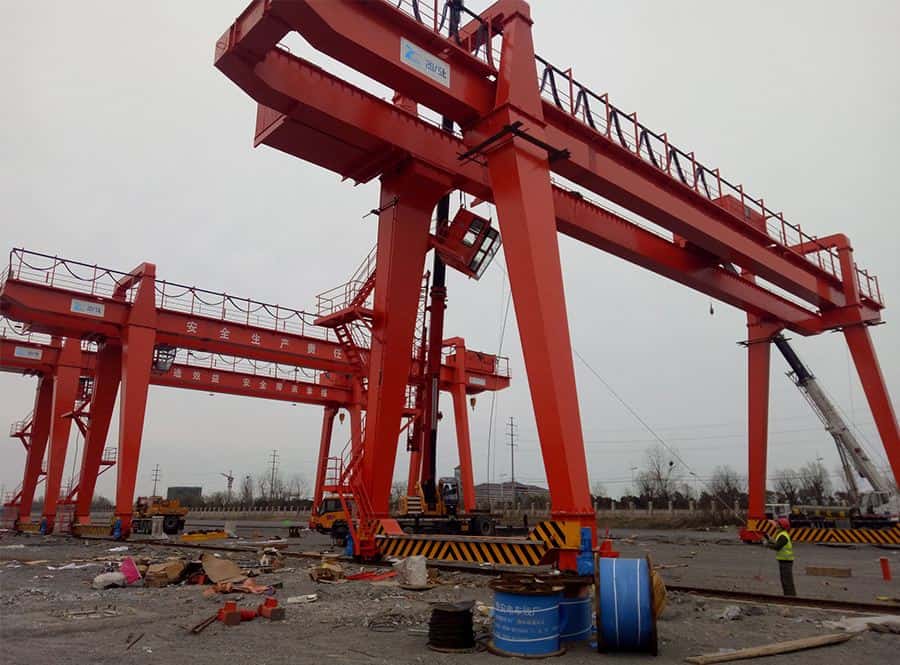
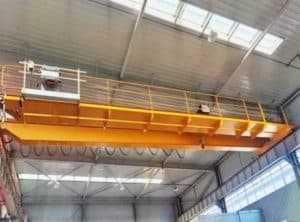
Gantry crane with electric hoist typically have two hooks, known as a “main hook” and an “auxiliary hook,” for several reasons. Here are some possible explanations:
Increased Versatility: Having two hooks allows the crane to perform multiple lifting operations simultaneously or sequentially. The main hook can be used for heavy lifting tasks, while the auxiliary hook can handle lighter loads or perform secondary operations without needing to change attachments.
Time Efficiency: With two hooks, the mobile girder rail gantry operator can optimize the lifting process by minimizing the time spent switching between different attachments. This helps improve overall efficiency and productivity on construction sites or in industrial settings.
Load Balancing: In certain situations, particularly when lifting long or bulky objects, using two hooks helps distribute the weight more evenly. This balanced lifting approach reduces the strain on the heavy duty gantry crane structure and ensures stability during the lifting operation.
Safety Considerations: Having a backup hook provides an additional safety measure in case one hook fails or encounters a problem. In the event of an equipment malfunction, the secondary hook can be used to secure the load and prevent accidents or damage.
It’s important to note that not all gantry crane shipping container have two hooks. The number and configuration of hooks can vary depending on the crane’s design, purpose, and specific requirements of the lifting tasks it is intended to perform.
This website uses cookies so that we can provide you with the best user experience possible. Cookie information is stored in your browser and performs functions such as recognising you when you return to our website and helping our team to understand which sections of the website you find most interesting and useful.
Strictly Necessary Cookies
Strictly Necessary Cookie should be enabled at all times so that we can save your preferences for cookie settings.
If you disable this cookie, we will not be able to save your preferences. This means that every time you visit this website you will need to enable or disable cookies again.