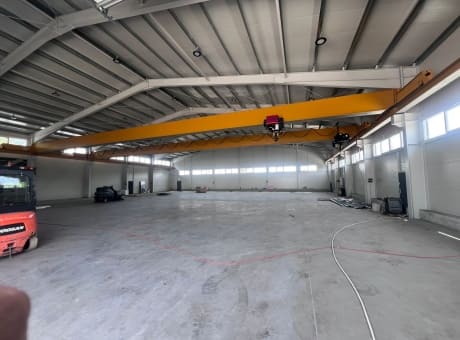
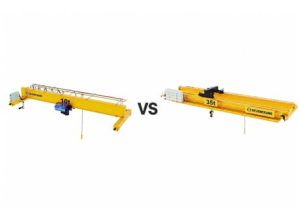
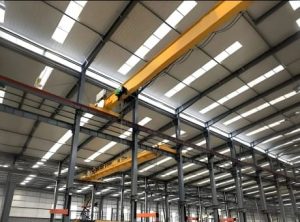
Overhead crane is the most commonly used indoor lifting equipment in factories, production workshops, and warehouses. It can efficiently complete tasks such as material handling, equipment assembly, workpiece relocation, and equipment maintenance. It enhances production efficiency and reduces the cost of manual handling.
Among various bridge cranes, single girder overhead crane and double girder overhead crane are the two most widely used types. Both can meet the lifting requirements of workshops, but there are significant differences in structural design, load-bearing capacity, operational performance, and applicable scenarios. During the selection process, we choose the appropriate crane based on the specific working environment to avoid resource waste.
Many users often struggle with the decision: should they choose a single girder or a double girder? This article, based on actual usage needs, dissects the differences and selection logic of the two devices to help enterprises precisely match the equipment.
1.What is a single girder overhead crane?
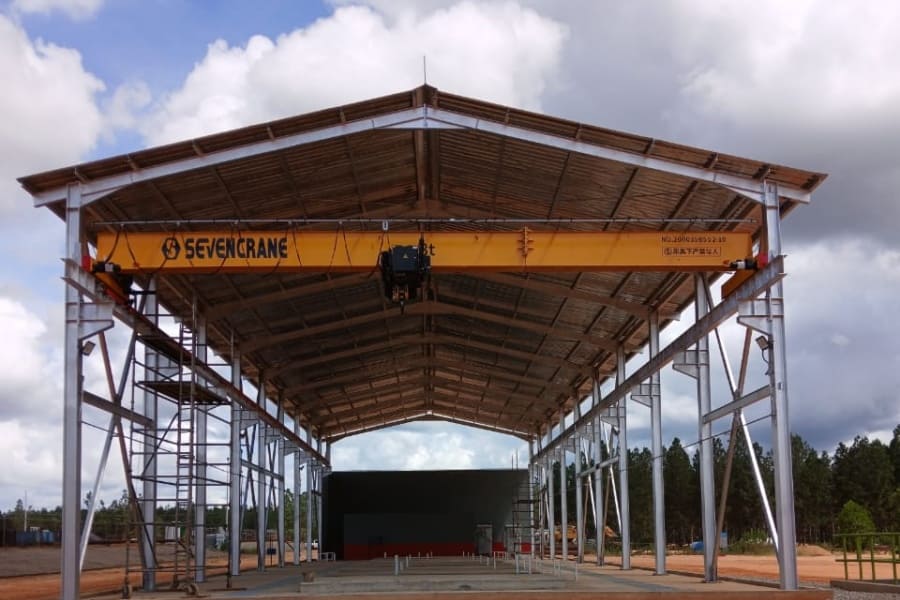
The single girder overhead crane has a simple structure, with its core consisting of a single main beam, two end beams, an electric hoist, and a walking and operating system. The equipment is erected on the factory track, with the electric hoist suspended below the main beam and running horizontally along the main beam to complete lifting and relocation operations.
Its core features are very distinct. The overall structure is simple, and the equipment has less self-weight, exerting less pressure on the factory’s load-bearing capacity. The equipment has a mature production process and lower initial procurement costs, with a significant cost advantage.
The single girder overhead crane is mainly used for medium and small-tonnage operations, suitable for light and medium-duty lifting conditions in conventional industrial workshops, and is the most versatile and widely used lifting equipment.
2.What is a double girder overhead crane?
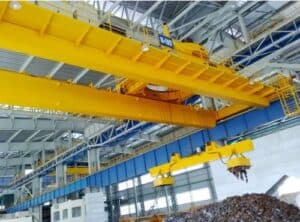
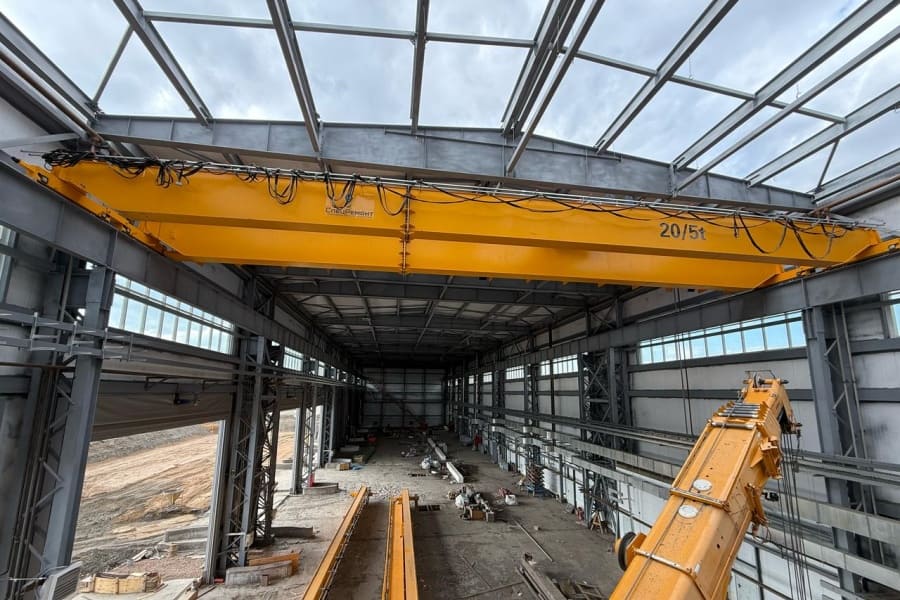
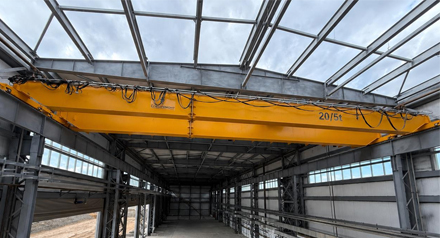
The double girder overhead crane adopts a double main beam structure, consisting of two parallel main beams, end beams, a dedicated lifting trolley, and a complete operating system. Unlike the single girder model, its lifting trolley runs above or between the two main beams, significantly improving operational stability.
The overall structure of the double girder equipment is more rigid and has better load-bearing performance. It can be adapted to larger-tonnage and larger-span workshop operation scenarios. At the same time, the body structure layout is more reasonable, allowing for a higher lifting height and a larger working space.
This type of equipment is specifically designed for heavy, high-frequency, and high-intensity lifting conditions and can operate continuously for a long time, suitable for harsh industrial production environments, with stability and durability far exceeding conventional single girder cranes.
3.Single Girder vs. Double Girder Overhead Crane: Key Differences
| Comparison | Single Girder Overhead Crane | Double Girder Overhead Crane |
| Main Girder | One main girder | Two main girders |
| Hoist / Trolley | Electric hoist usually runs under the girder | Hoist trolley runs between or above the girders |
| Structure | Simpler and lighter | Stronger and more robust |
| Lifting Capacity | Suitable for light to medium loads | Suitable for medium to heavy loads |
| Span | Suitable for many standard workshop spans | Better suited to larger spans |
| Lifting Height | Suitable for general lifting needs | Can provide greater lifting height in suitable designs |
| Working Class | Light to moderate duty | Moderate to heavy and frequent duty |
| Initial Cost | Usually lower | Usually higher |
| Best For | General material handling | Heavy-duty industrial lifting |
4.Core selection basis: Select precisely based on the working conditions
Based on the following five core parameters, choose the appropriate crane.
① Rated lifting capacity
If the daily cargo lifting is mainly for medium-sized loads, a single-girder overhead crane can fully meet the usage requirements and has a higher cost-effectiveness. If long-term lifting of heavy materials and equipment with a larger tonnage is required, and there is a high redundancy requirement for operational safety, a double-girder overhead crane should be chosen.
② Workshop span
The workshop span refers to the distance between the two tracks. The smaller the span, the more stable and sufficient the single-girder structure is. If the workshop span is large, the main beam of the single-girder is prone to insufficient force and slight deflection. The double-girder structure has stronger load-bearing capacity and stability, and is more suitable for large-span workshops.
③ Lifting height
If the workshop requires a higher lifting height of goods, the structural advantage of a double-girder overhead crane is more obvious. The double-girder layout can reserve more installation space, adapt to higher specifications of lifting accessories, and meet the requirements of high-position lifting. The final height adaptation still needs to be determined in combination with the net height of the factory building and the on-site structure.
④ Usage frequency and working level
If it is only occasional maintenance and intermittent lifting, a single-girder device is fully sufficient. If it is a production line support, daily high-frequency operation, and long-term continuous lifting of heavy conditions, high working level equipment needs to be matched. The double-girder structure is more durable and can adapt to high-strength, uninterrupted production demands.
⑤ Budget and comprehensive cost
The initial purchase cost of a single-girder overhead crane is lower, suitable for projects with limited budgets and regular working conditions. A double-girder overhead crane has a higher purchase price, but it has stronger performance, lower failure rate, and longer service life. The selection cannot only consider the unit price of the equipment, but also need to comprehensively consider installation costs, operating energy consumption, and later maintenance costs, to control the overall cost from a long-term use perspective.
5.Application scenarios
Single-girder bridge crane
General mechanical manufacturing workshops, various storage warehouses, product assembly production lines, equipment maintenance positions, and all material handling scenarios with light to medium loads and intermittent operations.
Double-girder bridge crane
Steel plant smelting workshops, heavy machinery processing plants, shipyards, casting workshops, large heavy production areas, and all scenarios with heavy loads, high frequency, and high strength for heavy lifting operations.
6.Can a single-girder overhead crane replace a double-girder overhead crane?
This is a question that many customers are concerned about. The answer depends on the actual working conditions on site, rather than the strength of the equipment itself.
If the lifting tonnage, workshop span, and usage frequency are within the standard adaptation range of the single-girder equipment, there is no need to purchase an additional double-girder crane, avoiding budget waste.
However, if there are heavy loads, large spans, high lifting, and high-frequency continuous operations on site, the single-girder equipment cannot meet the safety and performance requirements. In such scenarios, a double-girder bridge crane must be selected to ensure long-term stable production safety.
The core of selection is not to choose a device with stronger parameters, but to select a device that is adapted to one’s own working conditions.
When selecting a crane, it is not enough to only consider the tonnage size. A comprehensive evaluation should be made based on the lifting capacity, workshop span, lifting height, usage frequency and project budget. Complete working condition parameters can help you determine the most suitable and cost-effective lifting equipment.
If you are unsure about how to select, please provide your workshop working condition parameters. We will match an exclusive bridge crane solution and precise quotation for you.

 English
  Español
  Русский
  Português do Brasil
  Français