Port gantry cranes come in various types, each designed to fulfill specific requirements and cater to different port operations. Here are some common types of port gantry cranes:
Rubber-Tired Gantry (RTG) Crane: RTG cranes are mobile cranes that use rubber wheels for movement. They are commonly used in container terminals and can stack containers in rows and blocks. RTG cranes are flexible and can navigate through container stacks efficiently.
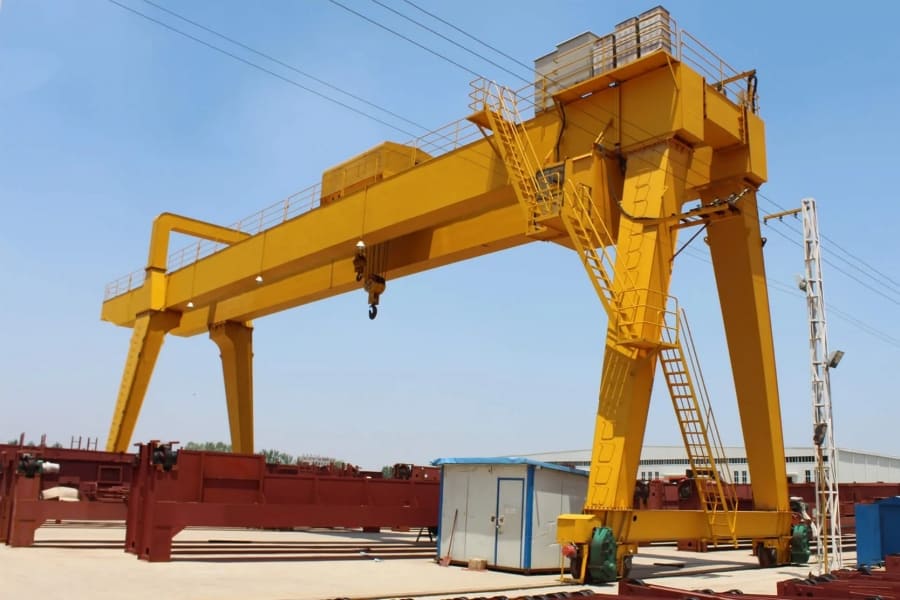
Rail-Mounted Gantry (RMG) Crane: RMG cranes are fixed gantry cranes that run on rails. They are employed in container yards for stacking and moving containers. RMG cranes are known for their high lifting capacity and precise positioning capabilities.
Ship-to-Shore (STS) Crane: STS cranes, also known as quay cranes, are large gantry cranes installed on the waterfront of a port. They are used for loading and unloading containers from ships. STS cranes have a significant lifting height to handle containers stacked on multiple levels.
Floating Gantry Crane: Floating gantry cranes are designed for ports with limited infrastructure or where water depths are shallow. They are mounted on barges or pontoons and can be moved as required. Floating gantry cranes are used for various operations, such as cargo handling and ship repair.
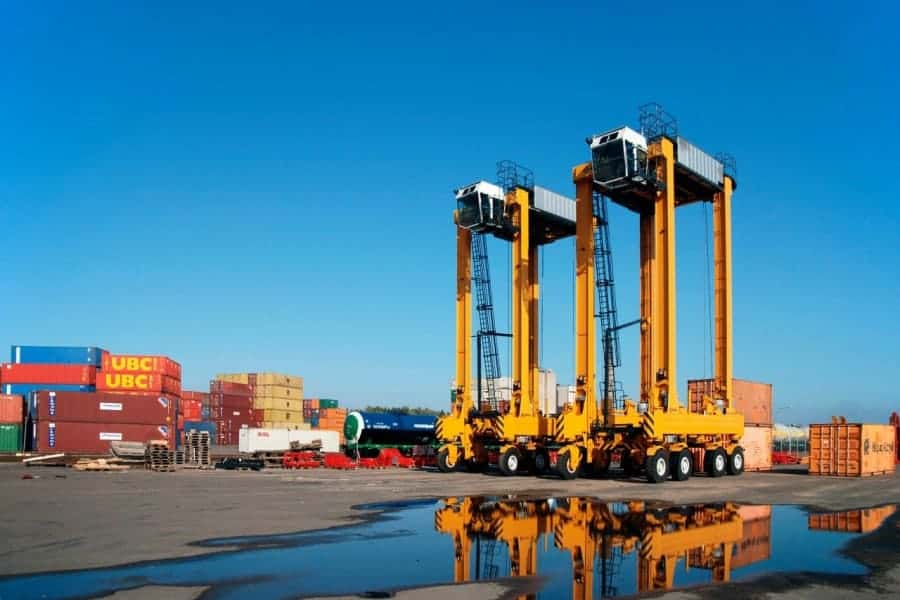
Straddle Carrier: While not strictly a gantry crane, straddle carriers are commonly used in port operations. They are mobile machines that can carry and transport containers by straddling them. Straddle carriers are versatile and can move containers within the port area or to and from the container yard.
These are just a few examples of port gantry cranes, and variations of these types exist to suit specific port configurations and requirements.
This website uses cookies so that we can provide you with the best user experience possible. Cookie information is stored in your browser and performs functions such as recognising you when you return to our website and helping our team to understand which sections of the website you find most interesting and useful.
Strictly Necessary Cookies
Strictly Necessary Cookie should be enabled at all times so that we can save your preferences for cookie settings.
If you disable this cookie, we will not be able to save your preferences. This means that every time you visit this website you will need to enable or disable cookies again.



 English
  Español
  Русский
  Português do Brasil
  Français